
Building Tools for South Asian Health
Why I Built My Own Medical Practice From Scratch
I’m a precision preventative medicine physician focused on South Asian health. I’m also a hospitalist. And this year, I became something I never expected: a builder.
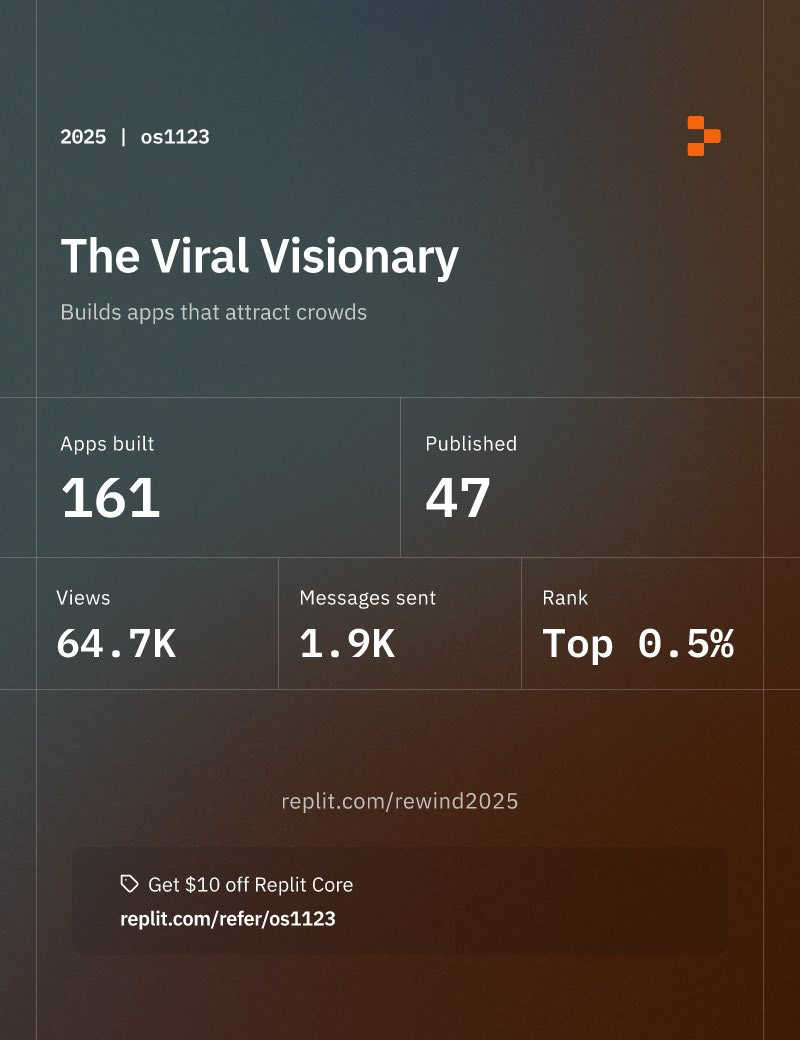
I built 161 apps on Replit and published 47 of them. That apparently puts me in the top 0.5% of users on the platform.
I’m not a software engineer. I’m a doctor who got tired of waiting.
The Problem No One Wants to Talk About
Here’s what I kept running into: the tools we use in medicine, the calculators, the risk scores, the reference ranges, the guidelines, weren’t built for people who look like me. Or my patients.
South Asians have a fundamentally different metabolic profile. This isn’t a minor footnote. It changes everything.
BMI cutoffs don’t apply. A South Asian at BMI 23 can carry the same metabolic risk as a white individual at BMI 30. The WHO acknowledged this years ago. Most tools still haven’t caught up.
Visceral adiposity behaves differently. We accumulate fat around organs at lower body weights, often invisible on the outside but deeply dangerous on the inside.
Beta cell function follows a different trajectory. South Asians tend to have lower beta cell reserve and earlier dysfunction. By the time fasting glucose looks “abnormal” by standard cutoffs, significant damage is already done.
The biomarkers that matter most aren’t the ones being tracked. Adiponectin, a key marker of metabolic health, is often lower in South Asians, yet almost never measured in standard care.
This isn’t speculation. The research exists. But it takes years, sometimes decades, for evidence to filter into guidelines, then into EMRs, then into the tools physicians actually use. Meanwhile, people are developing diabetes, heart disease, and fatty liver at rates far higher than their neighbors, often while being told their labs look “fine.”
I watched this happen to family members. I felt it in my own health journey. And I saw it every day in my patients.
The Turning Point
In mid-2024, Replit launched their AI Agent. I’d been frustrated with the available tools for tracking my own metabolic health, so I decided to see if I could build something better.
I built a health dashboard with wearable integration. It worked.
So I kept going.
What I Built
My entire clinical practice now runs on tools I built myself:
A custom website with a built-in AI agent that answers patient questions—not generic FAQ responses, but informed by the specific context of South Asian metabolic health
Patient intake forms with intelligent verification
An interactive service menu and dashboards
A patient education platform that curates content specific to each patient’s visit and concerns
Biomarker tracking and optimization powered by best-in-class AI tools—tracking the markers that actually matter for our population
Beyond the practice infrastructure, I built tools that solve specific problems:
PracticeOS: an AI-native practice hub for DPC and cash-pay clinics. It handles resource allocation, treatment protocols, HSA information, and acts as a real-time consultant for running a precision medicine practice. It understands the context of what I’m trying to do.
RosterRx: a free scheduling app for hospitalists, now used by multiple groups across the country.
Credential Management agent — an AI agent with Telegram bot that tracks my licenses, certifications, and renewal deadlines so I never have to think about it.
An HSA bundling tool: focused on newer therapies including longevity interventions, helping patients understand what’s actually eligible and how to optimize their spending.
Care Journey: a free charity project providing multilingual AI-powered health guidance for patients in underserved regions who lack access to care.
Some of these tools are now used by hundreds of people I’ve never met.
Why This Matters for South Asian Health
Here’s what I’ve realized: we cannot wait for the system to catch up.
The traditional path looks like this: researchers identify a disparity → studies are funded → data is collected over years → papers are published → guidelines committees convene → recommendations are updated → EMR vendors implement changes → physicians are trained on new protocols.
This takes a decade. Sometimes longer. And at every step, South Asian-specific considerations get diluted, deprioritized, or dropped entirely because we’re a “subgroup” that doesn’t move the needle on population-level statistics.
Meanwhile, South Asians have 4x the risk of heart disease. Type 2 diabetes is reaching epidemic levels in the community, often striking in the 30s and 40s. Fatty liver disease is rampant and underdiagnosed.
We cannot wait.
What I’ve learned this year is that we no longer have to.
The tools to build custom solutions now exist. You don’t need millions in funding. You don’t need a development team. You don’t need to convince a product manager at a healthcare software company that your population matters enough to prioritize.
You can build it yourself. Today.
The Compounding Returns
The returns on this investment have been compounding in ways I didn’t anticipate.
I’ve gotten very good at this. I know exactly how to get what I want from an app now. Each build is faster and more ambitious than the last.
More importantly, it’s pushed me to explore the frontiers of what’s actually possible. Not just “how do I use AI to save time?” but “how do I fundamentally reimagine care delivery for a population that’s been underserved by default?”
I’ve moved beyond chatting with AI in a terminal to building systems where AI functions as an actionable intern, doing the legwork, surfacing the right information at the right time, helping patients understand their health in their own language.
This isn’t about replacing physicians. It’s about amplifying what we can do. It’s about building the tools that should exist but don’t because the market didn’t prioritize them.
What I Want You to Take From This
If you’re a physician: The barrier to building custom tools has collapsed. If you’ve ever thought “I wish this existed,” you can probably build it now. And if you serve a population that’s underrepresented in standard guidelines, whether that’s South Asians, other ethnic groups, or any community with specific needs, you have the power to create something that actually fits.
If you’re a South Asian who cares about your health: Understand that the standard playbook may not apply to you. A “normal” BMI doesn’t mean you’re metabolically healthy. A “normal” fasting glucose doesn’t mean your beta cells are thriving. Advocate for testing that matters, fasting insulin, HOMA-IR, adiponectin, apoB, a real look at visceral fat. Find physicians who understand these distinctions. And know that the landscape is changing. Tools built specifically for our needs are coming, some of them are already here.
For everyone: The biggest lesson from this year wasn’t technical. It was learning to build tools I actually need, creating a framework for what matters, and not building for the sake of building.
I replaced what was probably thousands of dollars in monthly SaaS spend with software that fits exactly how I work. No bloatware. Nothing extra. Just what’s needed.
The Path Forward
Times are changing for doctors. This is one way we stay ahead.
More importantly, times are changing for patients, especially those of us from communities that have been afterthoughts in medical research and tool development.
We don’t have to wait for permission anymore. We don’t have to wait for validation from organizations that move at glacial speed while our families develop preventable disease.
We can build. We can share. We can push the frontier ourselves.
That’s what I intend to keep doing.
If you are a physician wanting to learn more about this, please reach out. Happy to help.
Thank you to Amjad Masad and the team at Replit for building something that made all of this possible. If you’re curious, try it out. You’ll feel it.


