


You’ve probably seen ads for stem cell-based therapies - for your knees, hair, energy - or at least heard of companies where you can ‘bank’ your stem cells for future use. It is by far, the most exciting area in medicine right now. Especially as many forces from technology with LLMs/AI storage techniques and the science and regulation are merging to make it happen.
I read about these and other promising stem cell advances with one question in mind ofcourse; will these work as well in South Asian bodies?
Stem cells are ‘repair’ cells. Some help form blood and immune cells after transplants. Others can be found in fat and are being studied for their potential to help regenerate other tissues. All of these cells do their work in a ‘metabolic’ environment, and that’s where it gets interesting for us.
Some studies show higher liver fat for a given BMI in South Asians
Lower adiponectin levels (a hormone made by fat that may influence cells involved in repair of blood vessels) in South Asians in some studies, including SHARE
My hypothesis (think of it as seed and soil – repair cells are the seed, insulin resistance, lower adiponectin etc are the soil) – the soil may matter more than we’ve given it credit for, and stem cell-based regenerative therapies currently being developed to repair metabolic and vascular problems may work best in South Asians when combined with approaches that improve the metabolic environment (soil) at the same time.
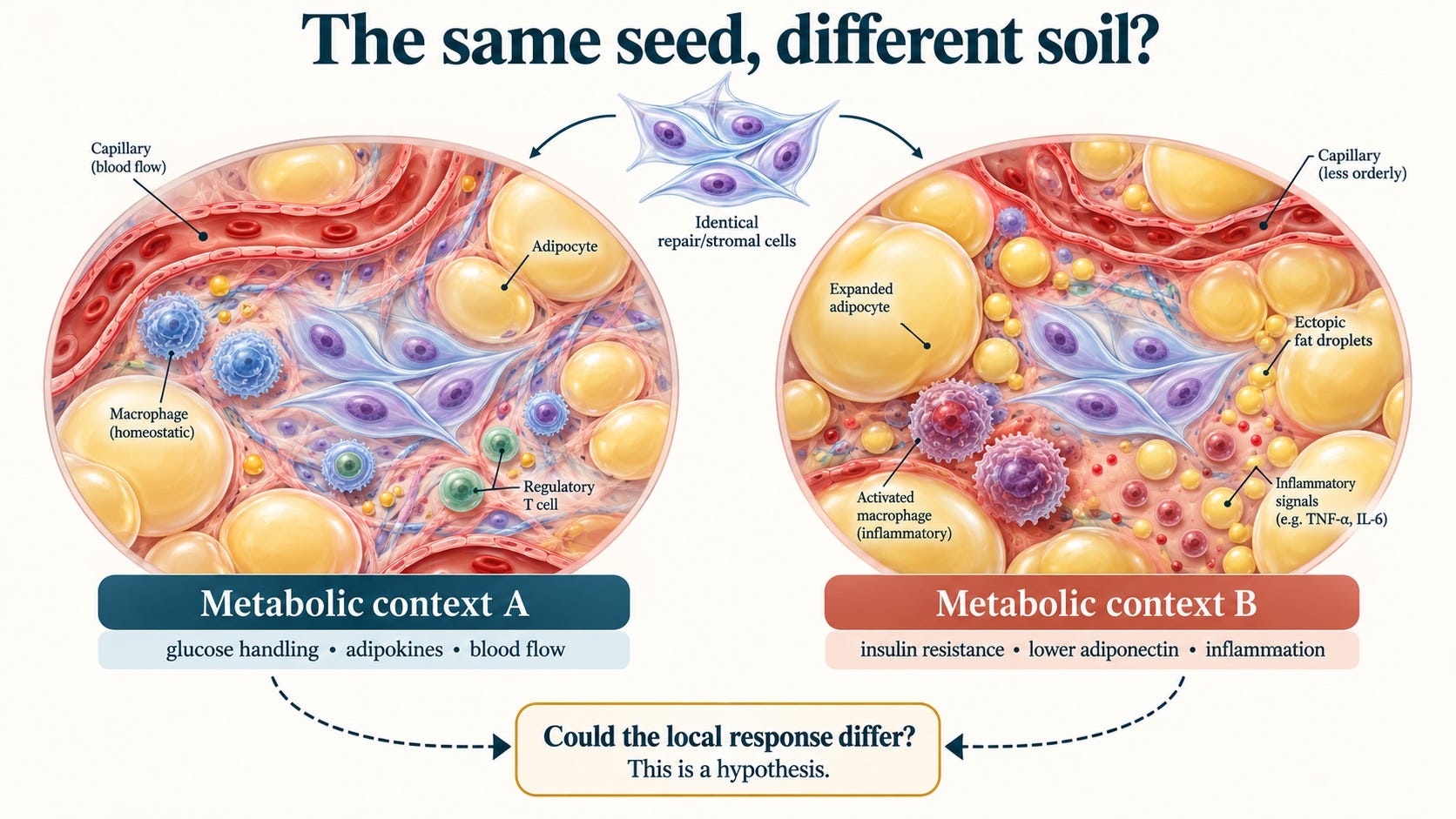
Same seed, different soil? The same repair cells could behave differently in healthier fat tissue (left) than in fat tissue with insulin resistance, lower adiponectin and inflammation (right). This is a hypothesis – it hasn’t been tested directly.
Genetics/ancestry matter. Here’s the evidence, including places where it’s lacking and where I’m speculating beyond it.
The cells, briefly
Some stem cells (found in bone marrow or cord blood) can form blood and immune cells (important after transplants – find out more here)
Stem cells found in fat (also called stromal cells) are being studied for regenerating/repairing other tissues
A third type – induced pluripotent stem cells (iPSCs – adult cells that are reprogrammed in the lab) – are currently mostly used in research
Some progenitor cells (more limited cousins of stem cells) are thought to help repair blood vessels mainly by sending signals to other cells, instead of turning into those cells themselves.
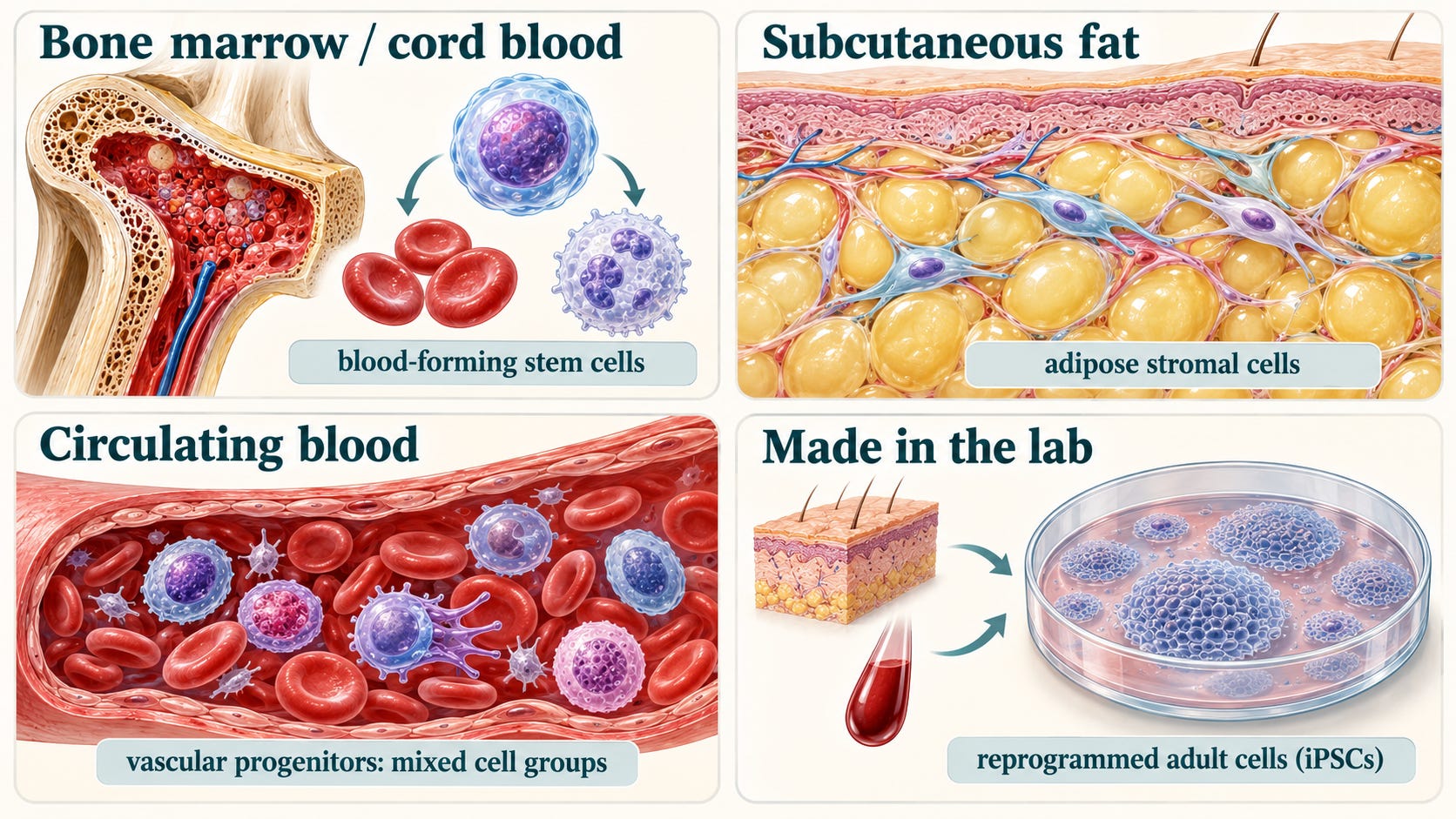
Where repair cells come from: blood-forming stem cells in bone marrow and cord blood, stromal cells in fat, a mixed group of vascular progenitor cells circulating in the blood, and iPSCs made in the lab by reprogramming adult cells (eg from skin or blood)