


For years, the biggest hurdle in longevity medicine hasn’t been the science, it’s been the payment model. Sure there are regulatory restrictions for stem cells and peptides, but those aren’t barriers regular patients face. We operate at the frontier of proactive, preventative care, but the financial tools available to patients, like Health Savings Accounts (HSAs), have been stubbornly stuck in a reactive, sick-care framework.
Until now.
What happened?
The legislative landscape is shifting. As of January 1, 2026, new rules are set to go into effect that will fundamentally change the game for direct-care and longevity-focused clinics. These changes are a massive tailwind, validating the direct-care model and opening a new, tax-advantaged gateway for millions of patients. Check out our previous post about the growth in DTC care here.
Today we break down what’s changing, why it’s a revolution for our field, and provide an innovative playbook for your clinic to prepare.
(Disclaimer: This post is for educational and informational purposes only. It does not constitute legal, financial, or tax advice. The strategies outlined are for consideration. Always consult with your clinic’s own legal, financial, and administrative professionals to ensure your programs are structured appropriately for your specific situation.)
The Two 2026 Changes You MUST Know About
Two key changes are set to take effect in 2026. On their own, they are significant. Together, they are revolutionary for our market.
1. Direct Primary Care (DPC) Fees Become HSA-Qualified
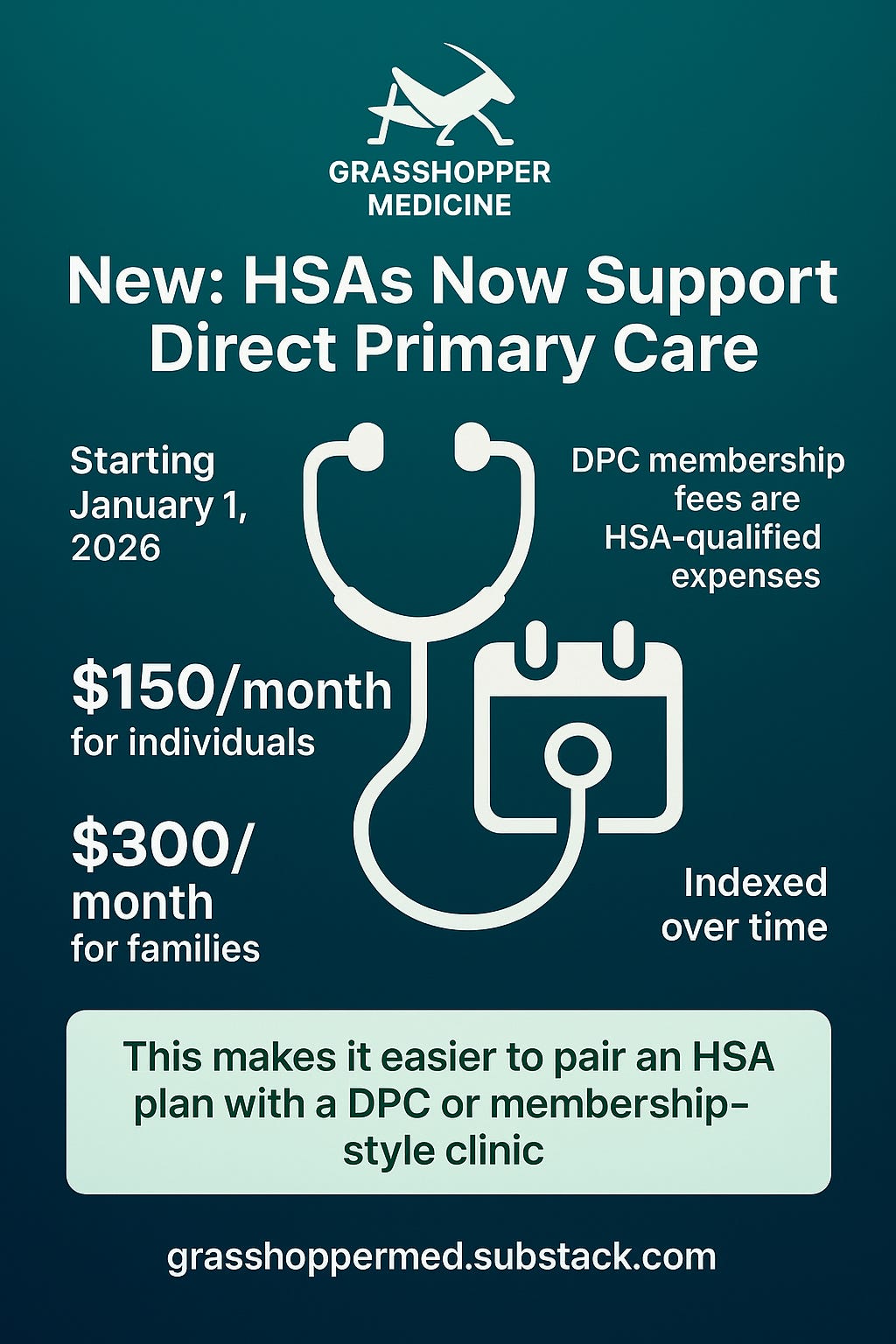
This is the big one.
The new legislation finally recognizes that a direct, membership-based relationship with a provider is a valid medical expense.
Previously, DPC or “concierge” fees existed in a gray area, often disallowed as an HSA expense. But starting in 2026, the law will explicitly permit patients to use their HSA funds to pay for DPC membership fees up to $150 per month for an individual or $300 per month for a family.
For longevity clinics, this is a seismic shift. Your membership model can now (if you so choose and structure it as such) move from an out-of-pocket “luxury” to a tax-advantaged “medical expense.”.
2. A Massive Expansion of HSA-Eligible Patients
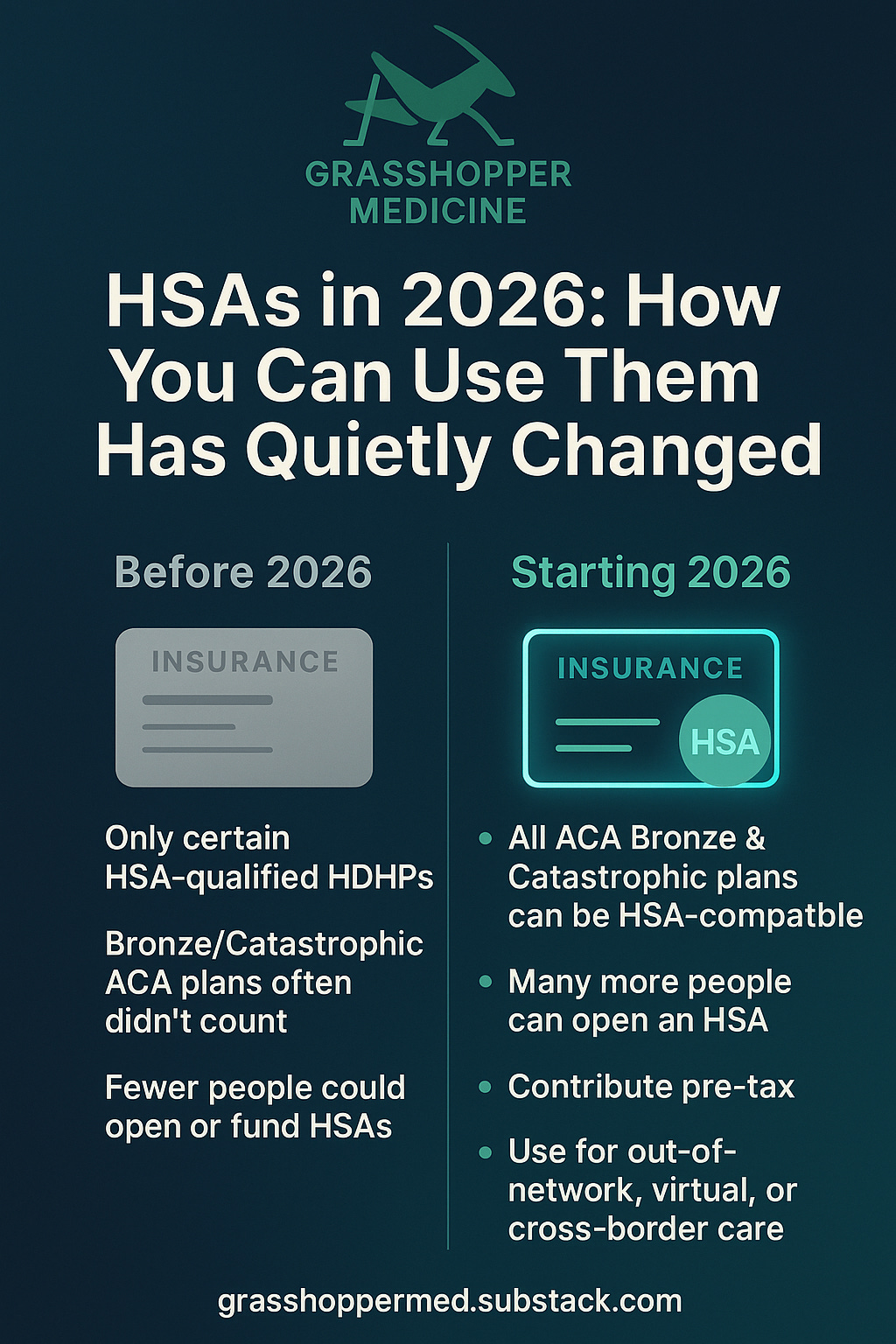
What good is an HSA-qualified service if patients don’t have HSAs? The second 2026 change solves this.
The new rules will automatically classify all Bronze and Catastrophic health plans as HSA-qualified.
This dramatically expands the total addressable market. Millions of new people, including younger and self-employed individuals who often favor these plans, will now be armed with a tax-advantaged savings account and looking for high-value ways to use it.
They are your future potential patients.
A quick (related) tangent: I’ve been quietly building small, AI-powered tools that help clinicians run modern, patient-centered practices: things like an HSA-compliant bundle builder for longevity clinics, a patient info video generator for labs and biomarkers, and scheduling/education agents that live on your site or WhatsApp.
Before I go too deep down the rabbit hole, I’d love to understand who’s actually interested in using these; especially those of you in the trenches of clinical practice.
Quick poll below 👇. Your answers will literally shape what I build next.
A Critical Distinction: Will Your Longevity Clinic’s Model Qualify?
This is the most important strategic question for your clinic. The new law specifically names “Direct Primary Care” (DPC). Your “longevity” or “concierge” clinic membership only qualifies if it is structured as a DPC-compliant offering.
The name of your clinic doesn’t matter; the structure of your membership fee does.
Here’s the breakdown:
Classic DPC: A (typically lower) monthly fee that covers all primary care services, like visits, consults, and basic labs. Crucially, DPC practices do not bill insurance for these services. The fee is the payment.
Classic Concierge: A (typically higher) membership fee that covers “access” (longer appointments, 24/7 contact). These practices often still bill insurance for the actual visit.
Longevity Clinic: A membership model that often bundles DPC-style primary care with advanced, non-primary care services (like advanced diagnostics, IVs, peptide protocols, or health coaching).
The 2026 law is designed for the Classic DPC model. The new rule specifies that the fee must be for “primary care services” provided by “primary care practitioners.”
This creates two major risks for longevity clinics: